
NCERT Solutions Class 10 Science Chapter 4
Chapter 4 – Carbon and Its Compounds
1. What would be the electron dot structure of carbon dioxide which has the formula CO2?
Solution:
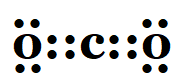
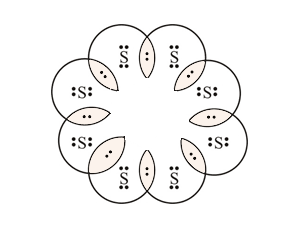
2. What would be the electron dot structure of a molecule of Sulphur which is made up of eight atoms of Sulphur? (Hint – The eight atoms of Sulphur are joined together in the form of a ring).
Solution:
In-text questions set 2, page number 61
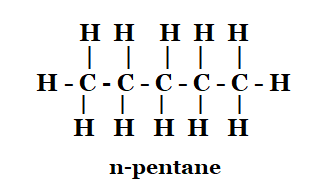
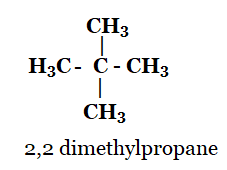
1. How many structural isomers can you draw for pentane?
Solution: The structural isomers of pentane are as follows:
n-pentane
2-methylbutane
2, 2-dimethylpropane
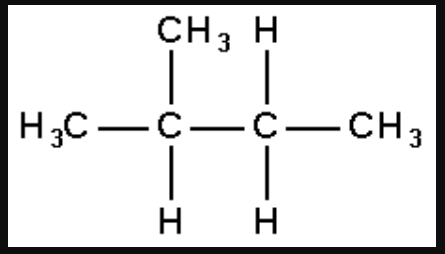
2-methylbutane
2. What are the two properties of carbon which lead to the huge number of carbon compounds we see around us?
Solution: Two properties of carbon which lead to the huge number of carbon compounds we see around us are as given below:
-
Carbon has six valence electrons which is actually a high number of valency.
-
Covalent bonding happens easily with carbon atoms and numerous others, such as oxygen, chlorine, nitrogen, sulphur, hydrogen, etc.
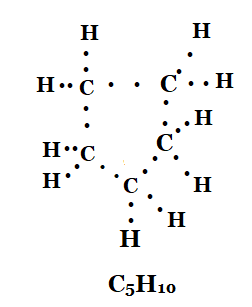
3. What will be the formula and electron dot structure of cyclopentane?
Solution: The formula and electron dot structure of cyclopentane is as given below:
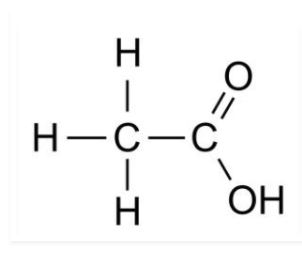
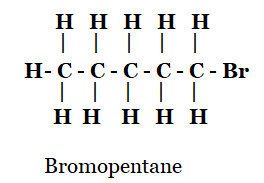
4. Draw the structures for the following compounds.
(i) Ethanoic acid
(ii) Bromopentane*
(iii) Butanone
(iv) Hexanal
Solution: i)
ii)
iii)
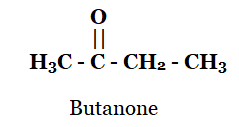
iv)
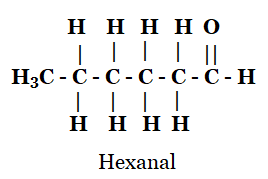
5. How would you name the following compounds?
-
CH3—CH2—Br
-
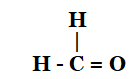
-
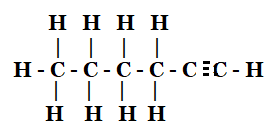
Solution:
-
-
Bromoethane
-
Methanal or Formaldehyde
-
1 – Hexyne
-
In-text questions set 3, page number 71
1. How is the conversion of ethanol to ethanoic acid an oxidation reaction?
Solution:
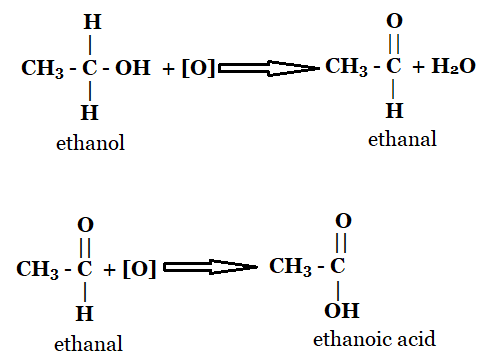
The conversion of ethanol to ethanoic acid involves the removal of the hydrogen atom and the addition of oxygen, and it is an oxidation reaction. In the first step, a H2 molecule is removed from ethanol to form ethanal. As the loss of hydrogen is oxidation, so the reaction is an oxidation reaction. Similarly, an oxygen atom is added to form ethanoic acid from ethanal. As the gain of oxygen is called oxidation, the reaction is an oxidation reaction.
2. A mixture of oxygen and ethyne is burnt for welding. Can you tell why a mixture of ethyne and air is not used?
Solution: A mixture of oxygen and ethyne is burnt for welding instead of a mixture of ethyne and air because the production of heat is very important for welding metals. When oxygen and ethyne are burnt, it burns completely and produces a higher temperature than air and ethyne. Oxygen and ethyne produce a very hot blue flame, but the mixture of air and ethyne gives out a sooty flame which means that there are unburnt particles, resulting in lesser heat.
In-text questions set 4, page number 74
1. How would you distinguish experimentally between an alcohol and a carboxylic acid?
Solution: In reaction with sodium carbonate, carboxylic acids produce carbon dioxide gas which turns lime water milky, whereas alcohols do not give this reaction. This experiment can be used to distinguish alcohol and carboxylic acid.
The reaction of the carboxylic acid with sodium carbonate:
2CH3COOH + Na2CO3 → 2CH3COONa + H2O + CO2
2. What are oxidising agents?
Solution: Oxidising agents are those compounds which either remove hydrogen or add oxygen to a compound. For example, halogens, potassium nitrate, and nitric acid.
In-text questions set 5, page number 76
1. Would you be able to check if water is hard by using a detergent?
Solution: It is not possible to check if water is hard by using a detergent because detergents are salts of ammonium or sulphonates of long-chain carboxylic acids. Unlike soaps, they do not react with calcium and magnesium to distinguish the nature of water.
2. People use a variety of methods to wash clothes. Usually, after adding the soap, they ‘beat’ the clothes on a stone, or beat it with a paddle, scrub with a brush or the mixture is agitated in a washing machine. Why is agitation necessary to get clean clothes?
Solution: Agitation is necessary to get clean clothes as it aids soap micelles to trap the oil, grease or any other impurities that have to be removed. When they are being beaten or agitated, the particles are removed from the clothes’ surfaces and go into the water, thus cleaning the clothes.
Exercise questions, page number 77-78
1. Ethane, with the molecular formula C2H6, has
(a) 6 covalent bonds
(b) 7 covalent bonds
(c) 8 covalent bonds
(d) 9 covalent bonds
Answer: (b) 7 covalent bonds
Solution: Ethane, with the molecular formula C2H6, has 7 covalent bonds.
2. Butanone is a four-carbon compound with the functional group
(a) carboxylic acid
(b) aldehyde
(c) ketone
(d) alcohol
Answer: (c) ketone
3. While cooking, if the bottom of the vessel is getting blackened on the outside, it means that
(a) the food is not cooked completely
(b) the fuel is not burning completely
(c) the fuel is wet
(d) the fuel is burning completely
Answer: (b) the fuel is not burning completely
Solution: While cooking, if the bottom of the vessel is getting blackened on the outside indicates that the fuel is not burning completely.
4. Explain the nature of the covalent bond using the bond formation in CH3Cl.
Solution: Carbon can neither lose 4 electrons nor gain four electrons as these processes make the system unstable due to the requirement of extra energy. Therefore, CH3Cl completes its octet configuration by sharing its 4 electrons with carbon atoms or with atoms of other elements. Hence, the bonding that exists in CH3Cl is a covalent bonding.
Here, carbon requires 4 electrons to complete its octet, while each hydrogen atom requires one electron to complete its duplet. Also, chlorine requires an electron to complete the octet. Therefore, all of these share electrons, and as a result, carbon forms 3 bonds with hydrogen and one with chlorine.
5. Draw the electron dot structures for
(a) ethanoic acid
(b) H2 S
(c) propanone
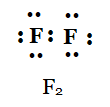
(d) F2
Solution:
a)
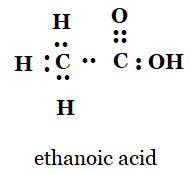
b)
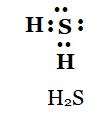
c)
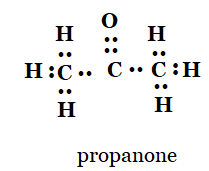
d)
6. What is a homologous series? Explain with an example.
A homologous series is a series of compounds which has the same functional group. This also contains a similar general formula and chemical properties. Since there is a change in the physical properties, we can say that there would be an increase in molecular size and mass.
For example, methane, ethane, propane, butane, etc., are all part of the alkane homologous series. The general formula of this series is CnH2n+2. Methane CH4 Ethane CH3CH3 Propane CH3CH2CH3 Butane CH3CH2CH2CH3. It can be noticed that there is a difference of −CH2 unit between each successive compound.
7. How can ethanol and ethanoic acid be differentiated on the basis of their physical and chemical properties?
Solution:
Ethanol |
Ethanoic acid |
It does not react with sodium hydrogen carbonate |
Bubbles and fizzes with sodium hydrogen carbonate |
A good smell |
Smells like vinegar |
No action in litmus paper |
Blue litmus paper to red |
Burning taste |
Sour taste |